
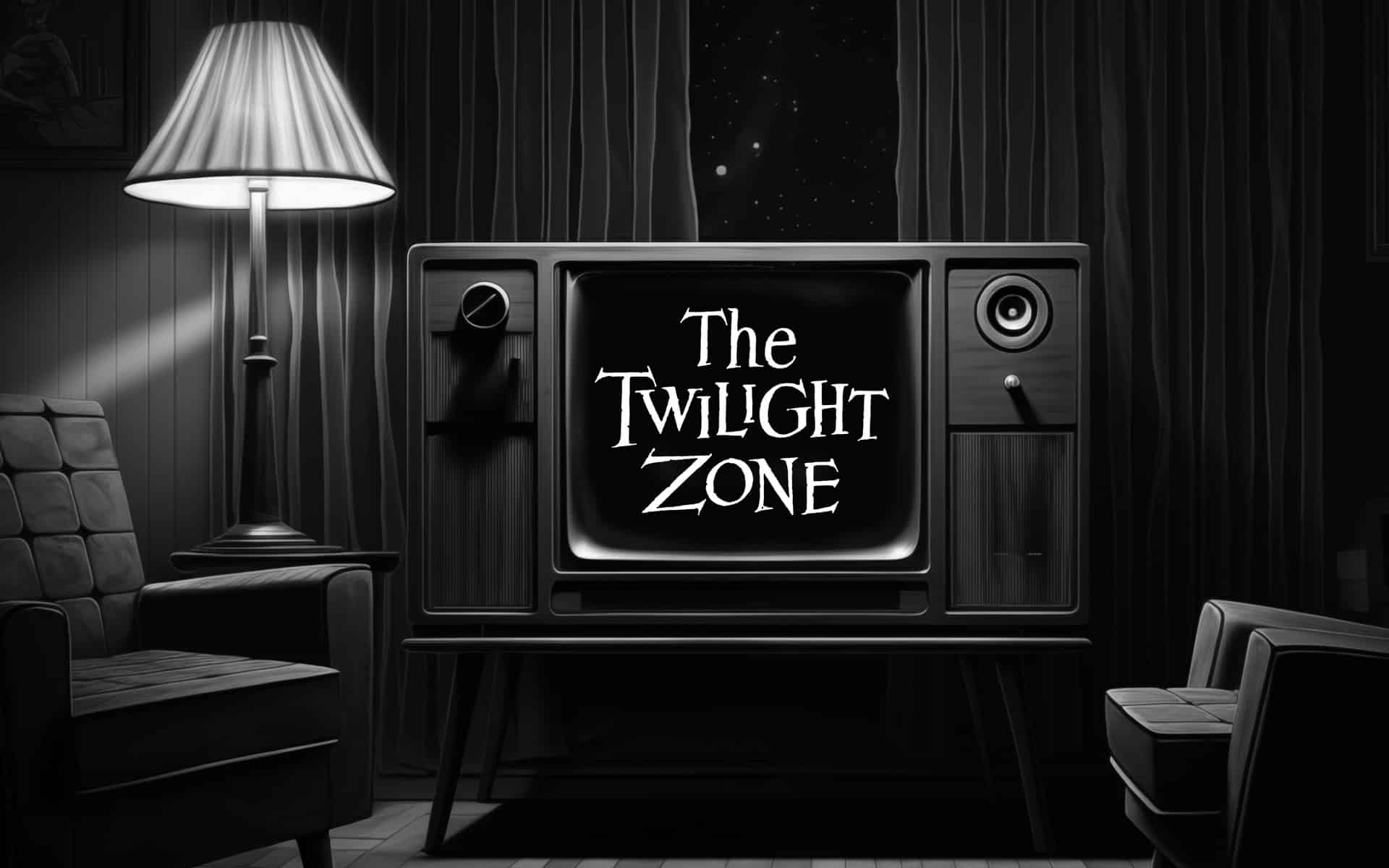
The Twilight Zone
- Description: An anthology series created by Rod Serling that delves into speculative fiction, psychological thriller, and supernatural elements. Each episode presents a standalone story with a twist ending.
- Stars: Rod Serling served as the host and narrator.
- Years: 1959-1964
The original Twilight Zone television series, which aired from 1959 to 1964, was created and hosted by Rod Serling, a talented writer and producer. The show’s concept came from Serling’s desire to explore thought-provoking and often unsettling stories that tackled various social, political, and philosophical themes within the framework of science fiction, fantasy, and horror.
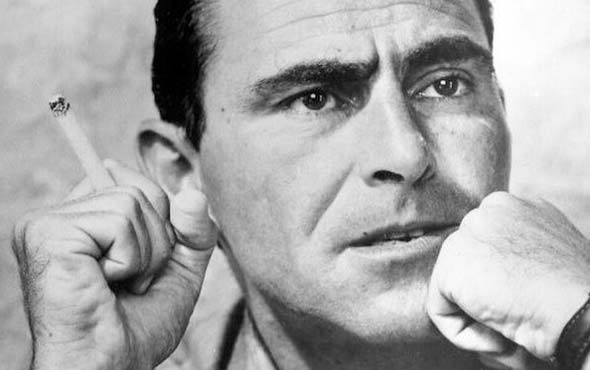
The show’s iconic intro set the tone for each episode: “You’re traveling to another dimension, a dimension not only of sight and sound but of mind. A journey into a wondrous land of imagination. Next stop, the Twilight Zone!”
The Twilight Zone was known for its unique anthology format, where each episode presented a standalone story with its own characters, settings, and plotlines. Serling, an exceptional storyteller, wrote many of the episodes himself or adapted existing stories and works to fit the show’s themes.
Other notable writers, such as Richard Matheson and Charles Beaumont, also contributed to the series.
The stories often revolved around ordinary people who found themselves in extraordinary and surreal situations, frequently featuring twists and surprise endings. The show’s narratives delved into moral dilemmas, time travel, parallel universes, alien encounters, and psychological suspense.
While the Twilight Zone was classified as science fiction and fantasy, it effectively used these elements to comment on real-world issues and societal concerns of the time, making it both entertaining and thought-provoking.
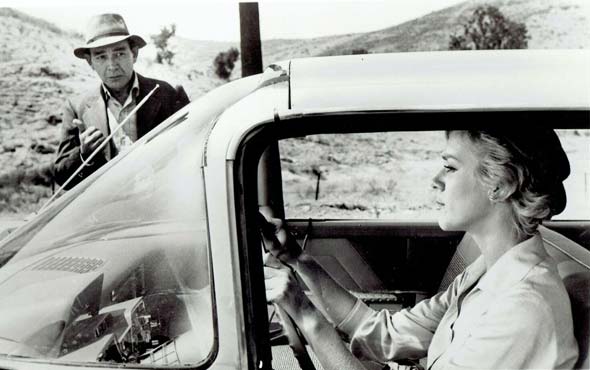
The series became a critical and commercial success, winning numerous awards and gaining a dedicated fanbase.
Rod Serling’s distinctive narration and thoughtfully crafted episodes made the Twilight Zone an enduring classic that continues to influence and inspire filmmakers and storytellers to this day.
Despite its initial cancellation in 1964, the Twilight Zone’s legacy has lived on through various revivals, adaptations, and spin-offs, solidifying its place in television history as one of the most influential and beloved anthology series ever created.
Rod Serling’s vision for the show as a vehicle for exploring the human condition and presenting timeless stories in a unique and imaginative way has left an indelible mark on popular culture.
The Twilight Zone 1959 – 1964 Opening and Closing Theme

Dark Shadows
- Description: A gothic soap opera that follows the mysterious lives of the Collins family, featuring supernatural elements such as vampires, ghosts, and witches.
- Stars: Jonathan Frid as Barnabas Collins, Joan Bennett as Elizabeth Collins Stoddard, and many others.
- Years: 1966-1971
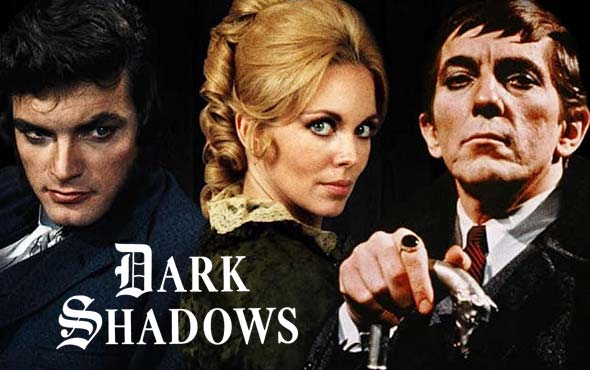
Dark Shadows was a groundbreaking American Gothic soap opera that aired on ABC from June 27, 1966, to April 2, 1971. Created by Dan Curtis, the show is renowned for its blend of supernatural elements, romance, and intricate storytelling. The backstory of Dark Shadows is as intriguing as the show itself:
- Concept and Development: Dan Curtis, a producer and director, conceived the idea for Dark Shadows while he was on a flight. He envisioned a TV series about a young governess who arrives at a mysterious mansion to care for a young boy. The mansion, Collinwood, would be home to a family haunted by a dark and complex history.
- Introduction of Barnabas Collins: The show initially struggled with low ratings until a decision was made to introduce a vampire character, Barnabas Collins. Played by actor Jonathan Frid, Barnabas Collins was a 175-year-old vampire who becomes the focal point of the show. His introduction in episode 210 (aired on April 18, 1967) marked a turning point in the series, propelling it to newfound popularity.
- Gothic Romance and Supernatural Drama: Dark Shadows became famous for its unique blend of Gothic romance, eerie atmosphere, and supernatural elements. The show featured a wide array of characters, including ghosts, witches, werewolves, and time-traveling individuals, adding complexity and intrigue to the plotlines.
- Time Travel Storyline: Dark Shadows ventured into a time-travel storyline, sending some characters back to the 18th century. This arc allowed the show to explore historical events and introduced a parallel story set in the past.
- Cultural Impact: Dark Shadows gained a massive cult following, especially among teenagers and young adults. The show’s popularity even led to the release of merchandise, tie-in novels, comic books, and a series of theatrical films.
- Innovations: Dark Shadows was known for pushing the boundaries of daytime television at the time. The show experimented with special effects, elaborate sets, and dark, suspenseful storytelling, making it a trailblazer in its genre.
- Revivals and Spin-offs: Dark Shadows was revived in various forms over the years. It returned briefly in 1991 as a prime-time series, and several TV movies and audio dramas were also produced. In 2012, a feature film adaptation directed by Tim Burton was released.

Despite its eventual cancellation in 1971, Dark Shadows remains a classic and influential piece of television history. Its impact on popular culture and its dedicated fanbase have solidified its status as one of the most iconic and beloved cult television shows of all time.
The Outer Limits
- Description: Another anthology series that explores science fiction and horror themes, often dealing with the unknown and the unexplained.
- Stars: The show featured various guest stars in each episode.
- Years: 1963-1965
The Outer Limits is a classic science fiction and horror anthology television series that originally aired from 1963 to 1965. Created by Leslie Stevens, the show’s backstory and development are as fascinating as the episodes it presented:
- Concept and Inspiration: The Outer Limits was conceived as an anthology series that would explore a wide range of speculative fiction, including science fiction, horror, and fantasy. The show’s creators aimed to delve into thought-provoking and often philosophical themes, much like its contemporary, The Twilight Zone.
- Government Influence: The show’s initial title was “Please Stand By,” but it was later changed to “The Outer Limits.” Interestingly, the U.S. government reportedly influenced the title change. The military felt that the phrase “Please Stand By” was too closely associated with emergency broadcasts, and they requested a new title to avoid confusion.
- Cinematic Style and Special Effects: The Outer Limits was known for its high-quality production values and cinematic style. It featured elaborate sets, impressive special effects, and innovative use of lighting and camera techniques. The show’s eerie and atmospheric visuals contributed to its overall appeal.
- Controlled Opening Sequence: The famous opening sequence of The Outer Limits, with the ominous voiceover and the famous line, “There is nothing wrong with your television set. Do not attempt to adjust the picture,” was designed to capture viewers’ attention and set the tone for each episode.
- Two Seasons: The Outer Limits ran for two seasons, from September 16, 1963, to January 16, 1965. Each season consisted of 32 episodes, totaling 49 episodes in all. Despite its relatively short run, the show had a lasting impact on science fiction television.
- Cancellation and Legacy: The show faced scheduling conflicts and competition from other programs, leading to its cancellation after two seasons. However, The Outer Limits gained a devoted fanbase over the years and became a cult classic. It is still praised for its imaginative storytelling, well-crafted scripts, and memorable episodes.
- Revivals: The Outer Limits was revived several times over the years. The most notable revival occurred in 1995, when a new version of the show premiered and ran for seven seasons. This revival retained the anthology format and continued to explore captivating science fiction and horror stories.

Overall, The Outer Limits is remembered as a groundbreaking and influential science fiction series that pushed the boundaries of television storytelling. Its legacy endures through its impact on subsequent science fiction shows and the continued admiration of fans who appreciate its thought-provoking narratives and creative exploration of the unknown.
The Addams Family
- Description: The Addams Family television show is a delightfully macabre and eccentric comedy series that follows the daily life of the bizarre and supernatural Addams family as they navigate the challenges of the “normal” world with their uniquely spooky charm.
- Stars: See the list below.
- Years: 1964-1966

Here are the main actors and their characters:
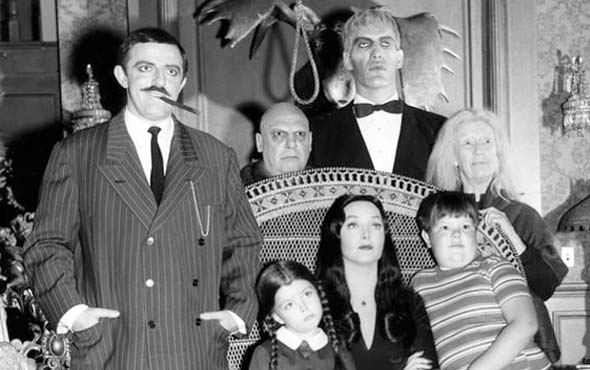
- John Astin as Gomez Addams – Gomez is the eccentric, passionate, and loving head of the Addams family. He adores his wife Morticia and revels in the bizarre and macabre.
- Carolyn Jones as Morticia Addams – Morticia is Gomez’s elegant and mysterious wife. She is known for her Gothic beauty, her devotion to her husband, and her love for cultivating poisonous plants.
- Ted Cassidy as Lurch – Lurch is the towering butler of the Addams family. He is known for his deep, monosyllabic voice and his slow, lumbering movements.
- Jackie Coogan as Uncle Fester – Uncle Fester is Gomez’s eccentric and often electrifying brother. He has a penchant for lightbulbs and explosives.
- Blossom Rock as Grandmama – Grandmama is Gomez’s mother and a witch who practices unconventional and quirky magic.
- Ken Weatherwax as Pugsley Addams – Pugsley is the mischievous and adventurous son of Gomez and Morticia. He often engages in experiments and dangerous activities with his sister Wednesday.
- Lisa Loring as Wednesday Addams – Wednesday is the solemn and morbid daughter of Gomez and Morticia. She has a love for spiders and enjoys participating in dark and creepy activities.
- Felix Silla as Cousin Itt – Cousin Itt is a short-statured, hair-covered relative of the Addams family who speaks in a high-pitched gibberish.
- Inspired by Charles Addams’ Cartoons: The Addams Family was originally inspired by the macabre and humorous cartoons of Charles Addams, which were published in The New Yorker magazine. These cartoons depicted a quirky and eccentric family living in a spooky mansion, finding humor in their delightfully dark and offbeat antics.
- Development and Production: In 1964, the TV show was developed by David Levy, who recognized the potential of adapting Charles Addams’ cartoons for television. The show was produced by Filmways and aired on ABC.
- The Creepy and Kooky Family: The Addams Family revolves around the lives of Gomez Addams, a passionate and wealthy patriarch; Morticia Addams, his elegant and vampish wife; their two children, Wednesday and Pugsley, who have a fondness for all things eerie and dangerous; Uncle Fester, a perpetually enthusiastic and electrically charged relative; Lurch, the loyal butler with a haunting demeanor, and other eccentric family members.
- Eerie Mansion and Quirky Theme Song: The Addams Family resided in a gloomy, Victorian mansion filled with secret passages, peculiar objects, and mysterious occurrences. The show’s iconic theme song, written by Vic Mizzy, complemented its spooky charm, becoming a memorable and recognizable tune.
- Embracing the Supernatural: While The Addams Family had a horror-inspired setting, it celebrated and normalized the unusual and supernatural aspects of life. The family’s love for the macabre and their delight in the peculiar was presented with humor and affection, making them endearing to viewers.
- Cultural Impact and Enduring Legacy: The Addams Family received critical acclaim and enjoyed a devoted fanbase during its original run. Despite its relatively short-lived original series, the show gained enduring popularity through syndication and continued to attract new generations of fans.
- Spin-offs and Adaptations: The success of The Addams Family led to various adaptations, including animated series, TV movies, and feature films. The franchise has been reimagined and reinvented for new audiences over the year
- Influence on Popular Culture: The Addams Family’s unique blend of horror and humor has had a profound influence on popular culture. Its impact is evident in subsequent horror-themed TV shows and films, as well as in the portrayal of eccentric and unconventional families in entertainment.
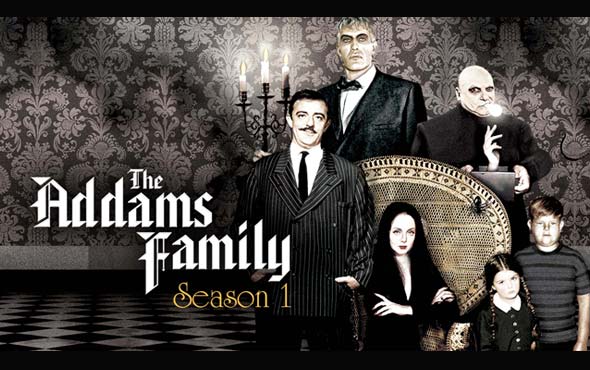
The original logo for “The Addams Family” TV show in the 1960s was designed by graphic artist and illustrator Ed Benguiat.
The Addams Family remains a beloved classic that continues to resonate with audiences, inviting them to embrace the weird and wonderful side of life. With its timeless appeal, the show’s delightfully creepy charm has solidified its place as a timeless and iconic part of television history.
The Munsters
- Description: The Munsters revolves around a family of loveable monsters living in suburban America. The characters in the series are inspired by classic horror movie monsters, but they are depicted in a humorous and lighthearted manner.
- Stars: See the list below.
- Years: 1964-1966

The Munsters is a classic American television sitcom that aired from September 24, 1964, to May 12, 1966. The show was created by Norm Liebmann and Ed Haas and produced by Universal Studios. It was one of several sitcoms from that era that featured supernatural or monstrous characters, along with “The Addams Family,” which premiered around the same time. Here’s an overview of the main characters and their backgrounds:
- Herman Munster (played by Fred Gwynne): Herman is the patriarch of the Munster family. He is a Frankenstein’s monster-like creature, created by Dr. Victor Frankenstein. In the show, Herman works at a funeral parlor and is known for his kind and bumbling nature. He is married to Lily Munster.
- Lily Munster (played by Yvonne De Carlo): Lily is the matriarch of the Munster family. She is a vampire, the daughter of Count Dracula, and the wife of Herman. Lily is the calm and sensible figure in the household, providing balance to Herman’s sometimes clumsy behavior.
- Grandpa Munster (played by Al Lewis): Grandpa, whose full name is Sam Dracula, is Lily’s father and Herman’s father-in-law. He is a vampire who often creates various potions and inventions in the basement laboratory. Grandpa is known for his mischievous and eccentric personality.
- Eddie Munster (played by Butch Patrick): Eddie is the young son of Herman and Lily. He is a werewolf but is just like any other regular boy, except for his pointy ears and propensity to transform into a werewolf at the sight of a full moon.
- Marilyn Munster (played by Beverley Owen and later Pat Priest): Marilyn is the niece of Lily and Herman. She is the only “normal” member of the Munster family and is often regarded as the “ugly duckling” by her relatives, though she is actually quite attractive by human standards.
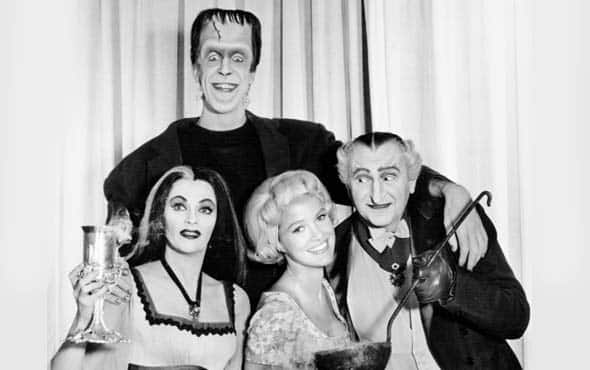
The show’s humor primarily comes from the fish-out-of-water scenario, as the Munster family attempts to adapt to and interact with the outside world, which often reacts with shock or fear due to their monstrous appearances. Despite their appearances, the Munsters are shown to be a close-knit, loving family with good intentions.
“The Munsters” received a cult following and remains popular in syndication. It also spawned several spin-offs, movies, and remakes over the years, solidifying its place as a beloved classic in television history.
Tales From the Crypt
- Description: Based on the EC Comics of the 1950s, this anthology series presents darkly humorous and terrifying stories hosted by the Crypt Keeper.
- Stars: The Crypt Keeper was puppeteered by John Kassir, and each episode featured different guest actors.
- Years: 1989-1996

Tales from the Crypt is a horror anthology television series that aired from 1989 to 1996, based on the EC Comics of the 1950s. The show’s backstory involves a collaboration between several creative minds and faced various challenges along the way:
- Inspiration from EC Comics: Tales from the Crypt drew its inspiration from the horror and suspense stories published by EC Comics in the 1950s, particularly the “Tales from the Crypt,” “The Vault of Horror,” and “The Haunt of Fear” comic series. These comics were known for their gruesome and macabre content, and they faced censorship and controversy during their heyday.
- Collaboration of Talent: The television series was created and produced by William Gaines, who was the publisher of EC Comics, along with David Giler and Walter Hill. They teamed up with Richard Donner, who directed the 1989 movie “Tales from the Crypt,” which served as the pilot for the TV series.
- HBO Original Series: Tales from the Crypt was part of HBO’s original programming lineup. This allowed the show to have more creative freedom and explore darker and edgier content than traditional network television.
- Crypt Keeper Host: One of the most iconic elements of the show was the Crypt Keeper, a puppet skeleton who served as the ghoulish host and narrator. Voiced by John Kassir, the Crypt Keeper provided dark humor and introduced each episode with a pun-filled introduction.
- Anthology Format: Similar to the original EC Comics, the TV series followed an anthology format. Each episode featured a standalone story with different characters and settings. The stories ranged from horror and suspense to black comedy and often ended with a twisted or ironic twist.
- Celebrity Guest Stars: Tales from the Crypt attracted numerous guest stars, including well-known actors and directors. Many Hollywood stars appeared in various episodes, adding to the show’s appeal.
- Challenges with Censorship: Despite airing on HBO, the show still faced some censorship challenges due to its explicit content. Some episodes had to be edited or toned down to comply with broadcasting regulations.
- Spin-Offs and Related Projects: The show’s popularity led to several spin-offs, including “Tales from the Cryptkeeper,” an animated series aimed at younger audiences, and “Tales from the Crypt Presents,” a series of horror movies released in the ’90s.

Tales from the Crypt remains a beloved classic among horror enthusiasts, known for its twisted storytelling, memorable characters, and the wicked humor of the Crypt Keeper. Its influence on horror anthologies and pop culture endures, and it remains a cult favorite to this day.
Part Two is coming soon!
If you’d like to be alerted when Part Two of this article publishes, please subscribe to our newsletter — The Halloween Times.

Subscribing to The Halloween Times brings a world of spooky delights to your e-mailbox year-round. You’ll gain exclusive access to a treasure trove of Halloween inspiration, from costume ideas and party planning tips to haunted house décor and chilling tales. Embrace the spirit of the season with each issue, and become the ultimate Halloween enthusiast with a subscription that keeps the thrills coming.

