

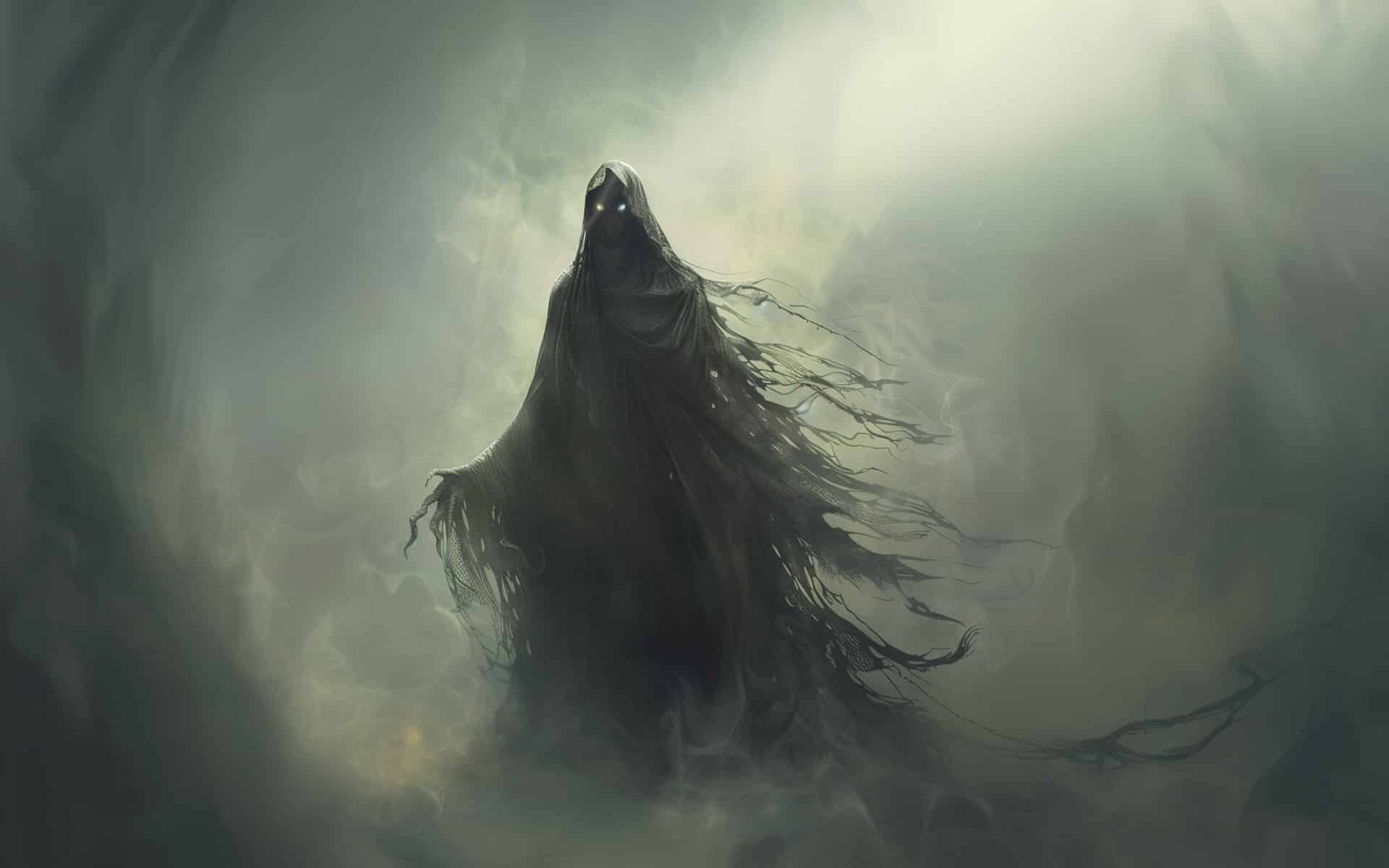
At its core, La Mala Hora describes a malevolent entity often encountered at deserted crossroads late at night. According to legend, this entity appears to travelers in various forms. Some accounts describe it as a shapeless, black mass that engulfs the unwary, instilling an overwhelming sense of dread and madness. Others depict it as a beautiful woman who transforms into a horrifying hag with red, glowing eyes and hair teeming with snakes, akin to the Medusa of Greek mythology. Regardless of its form, La Mala Hora is said to be an omen of misfortune or a harbinger of death, foretelling that something bad will happen to the person who sees it or to their loved ones.
The narrative elements of La Mala Hora reflect a blend of indigenous beliefs and Hispanic influences, which is characteristic of much Southwestern folklore. This synthesis creates a rich cultural tapestry that speaks to the historical and spiritual confluences of the region.
Local Encounters with La Mala Hora
A widow known for her keen senses and sharp intuition, Maria was returning home from visiting her daughter’s family late one moonless night. The path was familiar, illuminated only by the faint glow of distant stars. As she walked, a bone-chilling breeze swept through the air, carrying with it an inexplicable sense of foreboding. Suddenly, Maria’s steps faltered as she felt a presence beside her, an oppressive weight that seemed to suffocate the very air around her. With a trembling hand, she turned to see a towering figure shrouded in darkness, its eyes glowing with an otherworldly light that sent shivers down her spine. Frozen in terror, Maria watched as the figure passed silently by her side, its form fading into the night like a wisp of smoke.
Carlos, a seasoned rancher who had spent his entire life tending to his family’s land, was out checking on his cattle one fateful night when he felt a sudden chill sweep through the air. Despite the warmth of the summer evening, an icy breeze seemed to cut through his clothes, sending a shiver down his spine. As he looked up, he saw a figure standing at the edge of the pasture, its form obscured by the darkness but its presence unmistakable in the stillness of the night. With a sinking feeling in the pit of his stomach, Carlos knew that he was in the presence of La Mala Hora, the legendary guardian of the night.
A young woman known for her adventurous spirit, Rosa decided to take a late-night stroll through the woods on the outskirts of town. As she wandered deeper into the forest, she felt a sense of unease settle over her, the silence broken only by the occasional rustle of leaves in the breeze. Suddenly, she heard a haunting melody drifting through the trees, its mournful strains sending chills down her spine. With each step she took, the music grew louder, until Rosa found herself face to face with a figure cloaked in darkness, its eyes gleaming with an otherworldly light. Unable to tear her gaze away, she stood transfixed as La Mala Hora reached out a hand, beckoning her to follow into the depths of the forest.
Juan, a skeptical young man with a penchant for adventure, had heard the stories of La Mala Hora since childhood but had always dismissed them as nothing more than superstition. Determined to prove the locals wrong, he set out one moonless night to explore the abandoned ruins of an old hacienda rumored to be haunted by the legendary figure. As he wandered through the crumbling corridors, he felt a sudden chill in the air, followed by an overwhelming sense of dread that seemed to emanate from the shadows themselves. With a sinking feeling in the pit of his stomach, Juan turned to flee, only to come face to face with La Mala Hora, her eyes blazing with an otherworldly fire that seared his soul. From that moment on, Juan knew that the legends were true, and he vowed never to underestimate the power of the supernatural again.
Culturally, La Mala Hora serves several functions. It acts as a cautionary tale, warning against the perils of traveling alone at night and underscoring the traditional value placed on community and safety in numbers. It also taps into deep-seated fears of the unknown and the unseen forces that govern our lives. For a community living in a landscape as vast and often desolate as New Mexico, such legends help to codify and express the existential dread of isolation and the vulnerability of individuals in a largely untamed environment.
Psychologically, La Mala Hora represents the human tendency to personify our deepest fears and anxieties. This legend, like many others in the realm of the supernatural, allows individuals to externalize internal fears and societal anxieties in a form that is both tangible and narratively comprehensible.
By projecting these fears onto mythical figures, communities can confront and collectively manage the emotions associated with them. This externalization makes the intangible fears concrete, allowing for communal discussion, interpretation, and ultimately, assimilation into the cultural psyche.
The enduring popularity of La Mala Hora in New Mexican folklore also reflects the universal appeal of horror and mystery in human storytelling. Such stories stimulate the imagination, evoke strong emotional responses, and serve as thrilling forms of entertainment. They also perform an important social function by reinforcing community norms, such as the importance of caution and the virtues of prudence and preparedness.
Furthermore, La Mala Hora is emblematic of the broader themes in folklore that deal with fate and destiny. The encounter at the crossroads, a place where paths converge and diverge, symbolizes life’s unpredictable nature and the human struggle to influence or control our own destinies. This motif is prevalent in many cultures, illustrating a shared human preoccupation with the forces—seen and unseen—that shape our lives.
In conclusion, La Mala Hora is a powerful component of New Mexican folklore, encapsulating the fears, values, and cultural identity of the region. It serves not only as a spectral tale to caution the unwary traveler but also as a profound metaphor for the existential dilemmas that all humans face.
This legend, with its eerie and ominous undertones, continues to haunt the imagination, offering insights into the human condition and the cultural landscapes that shape our collective consciousness.
Through such myths, communities articulate their values, confront their fears, and continue the age-old tradition of storytelling that binds generations together in a shared heritage of myth and mystery.

