
Origins and Descriptions
The word “Rougarou” originates from the French words “loup garou,” where “loup” means wolf and “garou” signifies a man who transforms into an animal. This creature is known by various names in different cultures, but in Louisiana, Rougarou has stuck, perhaps due to the heavy influence of French settlers and the pervasiveness of the French language in the region.
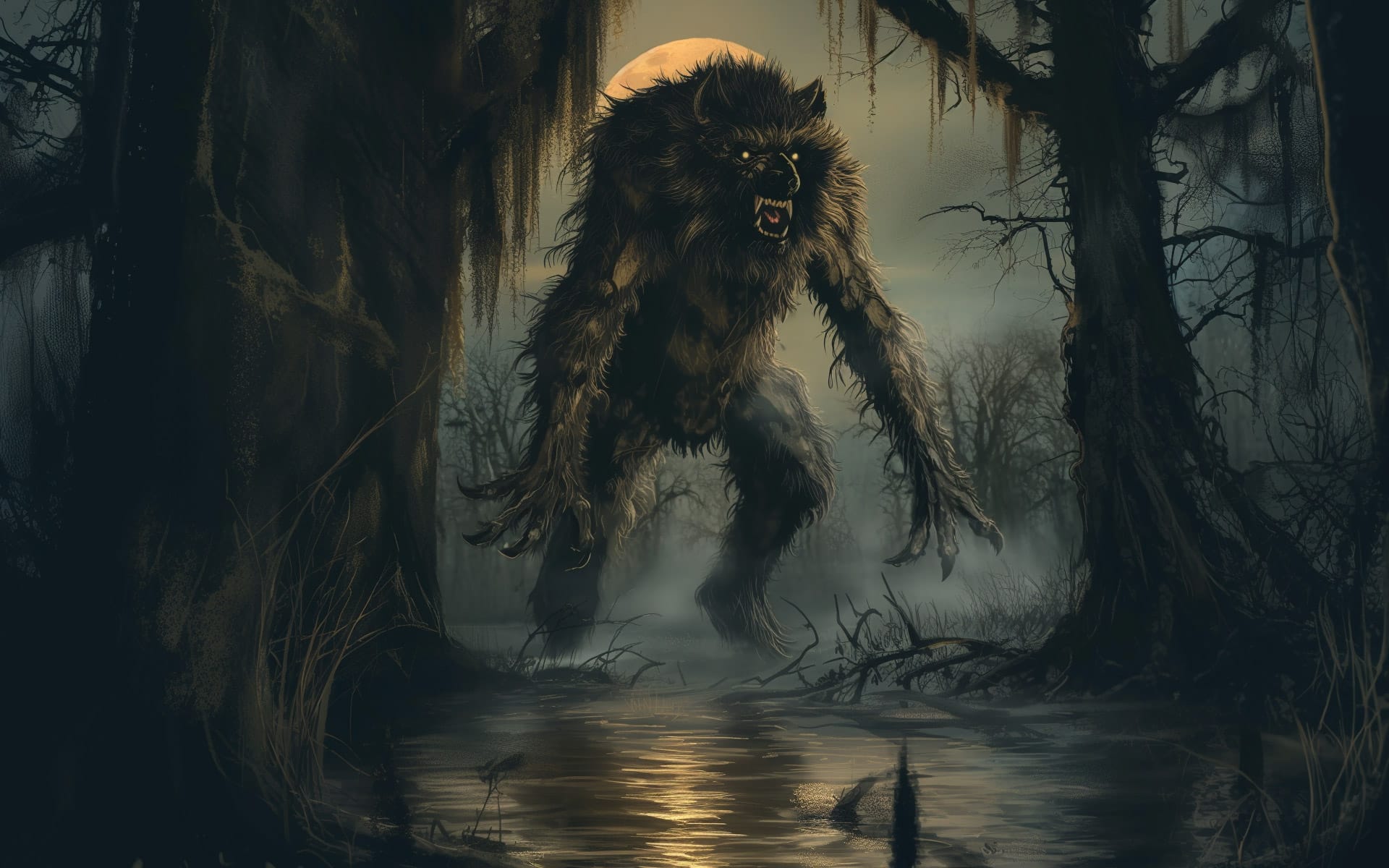
Descriptions of the Rougarou vary, but it is most commonly depicted as having a human body with the head of a wolf or dog, glowing red eyes, and sharp teeth. The creature is said to roam the swamps and woodlands of the Cajun and Creole regions, hunting down those who dare to enter its domain after dark.
The Role of the Rougarou in Cajun Society
The Rougarou holds a significant place in the folklore of Cajun society in Louisiana. This legendary beast, steeped in the mystique of the swampy, moonlit landscapes of the bayou, serves not only as a spine-chilling tale but also as a cultural symbol woven into the fabric of Cajun identity. The role of the Rougarou in Cajun society is multifaceted, embodying the community’s values, fears, and the ever-present influence of their rich, storied past.
Primarily, the Rougarou acts as a moral enforcer, its legend serving as a cautionary tale used to influence behavior within the community. One of the most common uses of the Rougarou story is to promote adherence to religious practices. It is often said that the Rougarou will hunt down and punish individuals who break Lent. Parents recount tales of the Rougarou to their children to deter them from misbehavior, warning that the creature prowls at night, seeking out those who do not follow the rules. This aspect of the Rougarou’s role is particularly poignant in Cajun society, which is deeply rooted in Catholicism and community values.
Additionally, the Rougarou legend functions as a cultural binder that strengthens communal ties. In a region where storytelling is a cherished tradition, the sharing of Rougarou stories helps to reinforce social bonds and shared values. These tales are often told during gatherings and family meetings, passing from one generation to another, each iteration adding to the communal tapestry of shared cultural heritage. The story of the Rougarou becomes a shared reference point, a common knowledge among Cajuns that helps define their identity.
The Rougarou also symbolizes the Cajun connection to their environment. The swamps of Louisiana are a key element of Cajun life, both as a source of livelihood and a setting for their folklore. The Rougarou is often said to inhabit these swamps, emerging from the fog-shrouded waters to roam the dark woods. Its presence in folklore highlights the respect and wariness that Cajuns hold towards the natural world, a recognition of the dangers and mysteries hidden within the dense marshlands. This creature of the night embodies the unknowns of the bayou, serving as a personification of the wild and untamed aspects of the landscape.
Moreover, the Rougarou’s existence in folklore speaks to the broader theme of resistance and resilience that characterizes Cajun history. Cajuns, having been displaced from their original home in Acadia (now Nova Scotia, Canada), resettled in Louisiana where they faced harsh conditions and isolation. The Rougarou’s fearsome reputation and its role as a guardian of Cajun morals and traditions can be seen as a metaphor for the Cajun community’s perseverance and determination to maintain their unique identity despite external pressures and historical upheavals.
In contemporary times, the Rougarou has transcended its origins in folklore to become part of popular culture and tourism in Louisiana. Festivals, haunted tours, and other cultural events often feature the Rougarou, showcasing the creature not only as a harbinger of doom but also as an emblem of Cajun folklore. This adaptation of the Rougarou legend helps preserve Cajun cultural identity and introduces it to a broader audience, ensuring that the lore, like the community itself, continues to evolve while staying rooted in its traditional foundations.
Thus, the Rougarou remains a powerful figure in Cajun society, embodying the intertwining of folklore, morality, cultural identity, and environmental consciousness. Its story is a testament to the complex, rich tapestry of Cajun life and serves as a reminder of the depth and durability of cultural traditions.
Cultural Syncretism and Evolution
The Rougarou story is an excellent example of how folklore can evolve over time and through the interaction of various cultures. Elements of the Rougarou are believed to have been influenced by Native American and even African spiritual beliefs. The Native American stories of shape-shifters and skinwalkers share similarities with the concept of a human transforming into an animal, suggesting a blending of myths and legends that occurred as these diverse peoples interacted and intermingled.
In more modern contexts, the Rougarou has taken on new life in popular culture. It is featured in books, films, and festivals, which celebrate the rich folklore of Louisiana. The annual Rougarou Fest in Houma, Louisiana, for instance, is a community event that celebrates the folklore with costumes, games, and public awareness about coastal erosion, tying the myth to contemporary issues.
The Rougarou of Louisiana is a testament to the power of folklore in cultural identity and societal functions. This legendary creature encapsulates the fears and values of the people of Louisiana, serving as a guardian of both cultural and environmental ethos. As long as the swamps whisper in the winds and the moon casts eerie shadows across the bayous, the legend of the Rougarou will continue to thrive, a chilling yet cherished part of Louisiana’s folkloric heritage.

